
Service Times
Regular weekly timetable
Mon
- –
Tue
- –
Wed
- –
Thu
- –
Fri
- –
Sat
- 11:15 Matins
Sun
- 11:15 Choral Eucharist
- 15:15 Choral Evensong
- 09:00 (Morning Prayer)
- 17:30 (Evensong)
See service times at the other church in Dublin 8 →
Times can change over Christmas and Easter and during the summer; check with the church before travelling.
About St Patrick's Cathedral
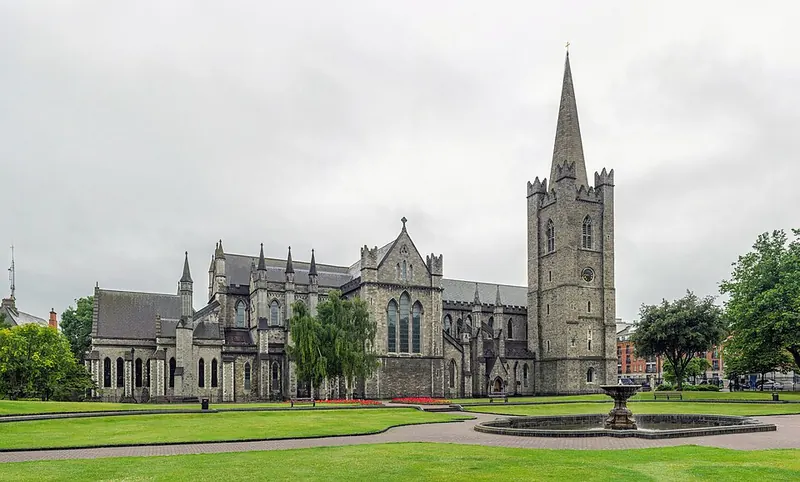
St Patrick's Cathedral is the National Cathedral of the Church of Ireland and the largest church in Ireland. Founded in 1191, it stands on the site where tradition has it that St Patrick baptised converts to Christianity around 450 AD. Jonathan Swift, author of Gulliver's Travels, was Dean here from 1713 to 1745.
History
The cathedral describes the Guinness Restoration as the largest restoration project it has undergone, and credits it with saving the building from near ruin. According to its own account, remembrance of those lost in conflict has been part of the cathedral's role since its foundation, and soldiers were buried here during the Williamite-Jacobite War in the seventeenth century.
Jonathan Swift, author of Gulliver's Travels and Dean of the cathedral, is buried in the building. The cathedral also traces the phrase "to chance your arm" to a feud played out within its walls.
Notable features
The earliest record of an organ in the cathedral dates from 1471, when Archbishop Tregury bequeathed a pair of organs for use in the Lady Chapel. Various records of payments follow over the next two centuries. The Lady Chapel is dedicated to the Blessed Virgin Mary and has since been restored.
Activities
Music has been part of the cathedral's daily life since its foundation, and the cathedral records that pupils of its choir school have sung services during school terms since 1432.
Clergy
- Dean Dr William Morton
Location & contact
Address
St Patrick's Close, Dublin 8, Dublin, D08 H6X3
Phone
+353 1 453 9472Website
www.stpatrickscathedral.ie